Need to convert your PDF into an EPUB file for seamless eBook reading? You’re in the right place! Our free PDF-to-EPUB converter makes it quick and easy—no sign-up, no cost, just results. Whether you’re an author, student, or avid reader, this tool ensures your content is ready for any eReader in minutes.
Free PDF to EPUB Converter
Convert PDFs Instantly
Design with DESIGNRR today
Convert Your PDFs to EPUB, Absolutely Free!
Convert PDF to EPUB without uploading it
Reflow a fixed page into an ebook that adapts to any screen. The file is read in this tab, it is never sent to a server, and there is no size cap.
Drop your file here
or choose one
Text-based PDFs. Scanned pages have no text layer to read.
0 bytes uploaded. The conversion runs in this tab.
- Nothing is uploadedThe counter under the button shows the bytes sent to us. It stays at zero for the whole conversion.
- No size limitNothing has to fit through an upload form, so a 400MB manual behaves the same as a 4MB report.
- A valid EPUB 3Output is built to the EPUB 3 specification and validates against epubcheck, the official W3C validator.
How it works
- Drop your .pdf file onto the box.
- Let the converter find the headings and strip the page furniture.
- Download the EPUB.
Why the file never leaves this tab
Every other free PDF to EPUB converter works the same way. You choose a file, it travels to a server in another country, software there converts it, and the result travels back. The good ones encrypt the transfer and delete the file after a few hours. You are asked to take that on trust, and for a marketing report it is a reasonable thing to trust.
For a manuscript you have not published, a client deliverable, a medical record or an internal document, it is a strange thing to be asked. This converter reads the PDF with the same file API your browser uses to show you a photo before you post it. The bytes are decoded a few centimetres from your eyes, the EPUB is assembled in memory, and the download button hands you a file that was built on your own machine.
There is no server to trust, because there is no server. That is also why there is no size limit and no queue.
What the converter has to guess
A PDF does not store a document. It stores where each glyph sits on a page. It has no idea what a heading is, where a paragraph ends, or that the words repeating at the top of every page are a running header rather than the first line of the text.
So the conversion is a set of educated guesses, and it is worth knowing which ones. Lines are grouped by their baseline. Paragraphs run on until there is a wide vertical gap, or a short line that ends a sentence. A line set noticeably larger than the body text becomes a heading, and a much larger one becomes a chapter break. A word broken across two lines with a hyphen is put back together. Anything that appears at the top or bottom of most pages is treated as furniture and removed, along with bare page numbers.
On prose these rules are close to invisible. That is why the tool is good on reports, whitepapers, manuscripts and lead magnets, and honest about everything else.
When a PDF will not convert well
A scan is not a document. If the pages are photographs of paper, there is no text layer to read and this tool will tell you so rather than hand you an empty book. Run it through OCR first and come back.
Heavy multi-column layouts, marginal footnotes, pull quotes threaded between columns and complex tables all rely on position to carry meaning, and position is exactly what an EPUB throws away. Images are embedded, but they land at the end of the page they came from, because a PDF never recorded how a picture related to the sentence beside it.
If the original was designed rather than typed, a straight conversion will disappoint you, and no converter on the internet will do better. What you want in that case is to rebuild it.
Reflowable and fixed are not the same kind of file
A PDF is fixed. Every line breaks where it broke when the file was made, which is why reading one on a phone means pinching and dragging. An EPUB is reflowable. The reader chooses the font, the size and the width, and the text rearranges itself to fit.
That is the whole reason to convert, and it is also the reason a converted file will never look like the PDF did. You are trading a designed page for a readable one. If you want both, you have to lay the book out again rather than convert it.
Questions
Will it work on a scanned book?
Only if the scan has already been through OCR. A PDF that is only images has no text to extract, and this converter will say so instead of handing you an empty ebook.
How good is the result?
Good on prose: reports, whitepapers, manuscripts, lead magnets. Weaker on anything with heavy multi-column layout, sidebars or footnotes in the margin, because a PDF stores where the letters sit, not what they mean.
Where do the images end up?
Embedded, at the end of the page they came from. A PDF does not record how an image relates to the text around it, so exact placement cannot be recovered.
Is there a size limit?
No. The old version of this page capped uploads at 10MB because the file went to a server. It does not any more.
Convert Your First PDF to EPUB Free Today
Make your PDFs eBook-ready in a snap. Loved how easy it was? Step up with Designrr—transform blog posts, videos, and more into stunning, professional eBooks. One free converter, endless creative possibilities. Start small, grow big—all with Designrr.
Take Your eBooks to the Next Level with Designrr
Save Time and Money
Publish in Minutes
Here's How it Works
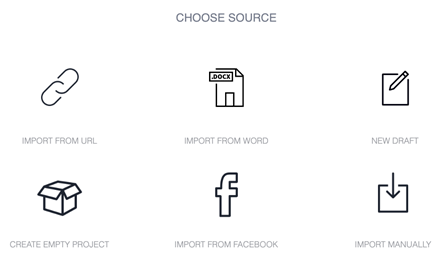
Choose Source
Import Content or Start from Scratch
Designrr works with all websites, Word or any editor
Simply enter the url when you start a new project. We’ll start loading the content in the background, ignoring all the site navigation, adverts, sharing icons and anything you wouldn’t want in an ebook.
- Import from a URL, Word, or Google Docs
- Or click New Draft to start from scratch
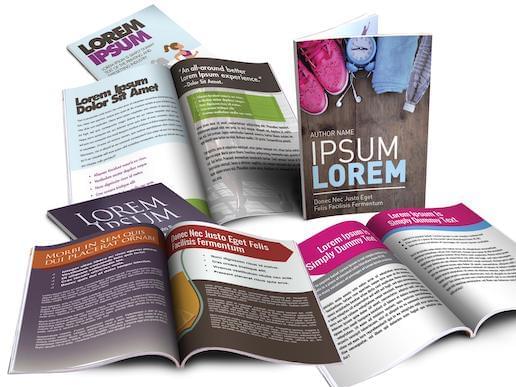
Template Library
Choose an eBook Template
Get started immediately with over 100 project templates
You can completely customize it afterwards, changing images, fonts and styles.
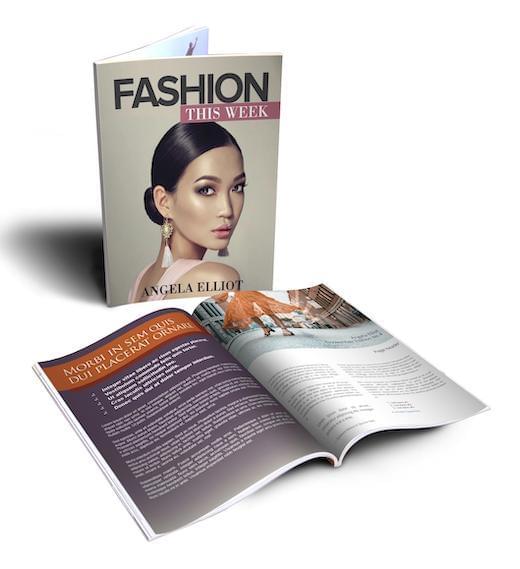
- Change the cover image to whatever you want
- Use single or two column layouts
Publish to PDF & ePub
Customize and Publish
Adjust and tailor your book to suit your style
Add images from our copyright free image search or upload your own. Change your ebook format with font styles, the ebook cover, headers and foots and finally add a call to action.
- With one click you can publish
- The pdf is also stored in your account so you can access it anytime and download it to your computer
- It's yours to keep
More Power Features in Designrr Include
One click global editing
Complete Control
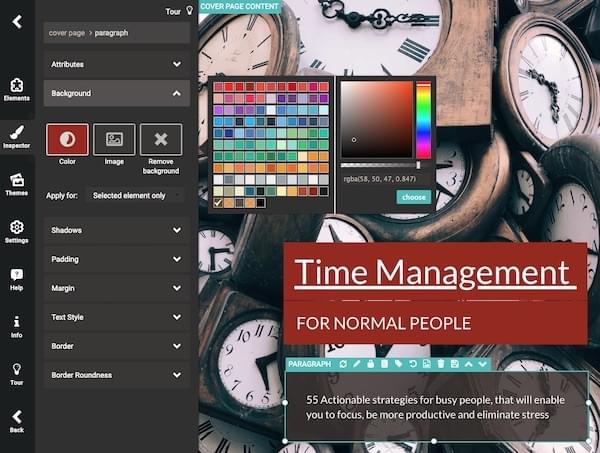
If you want to go deeper and customize, then you can change anything within your ebook using our design drag-and-drop tool.
- You can edit text, background colors, fonts, styles, images
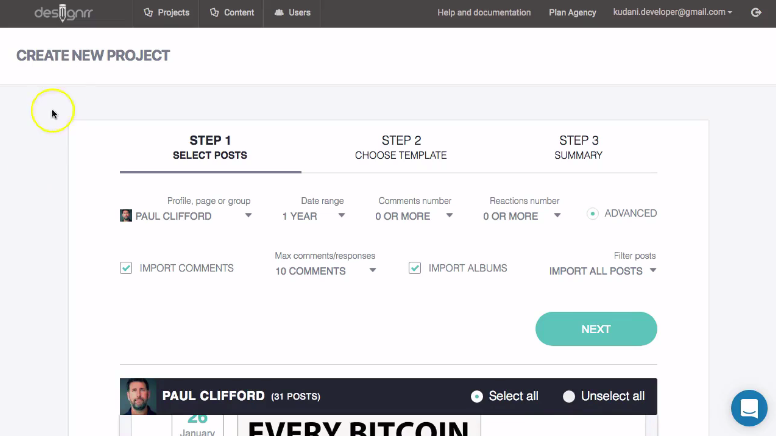
Create Ebooks from Facebook
Facebook Import
You can import from your Facebook profile or Page, so you can create an ebook from your social posts and photos.
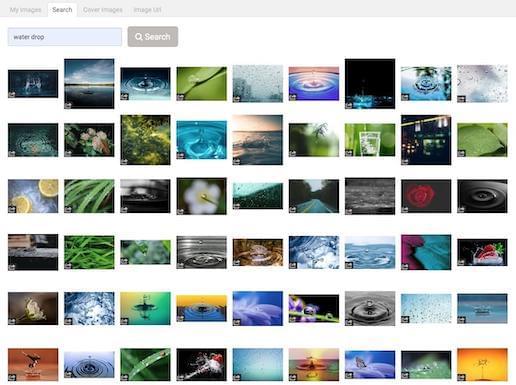
Add beautiful images to all your projects
Copyright Free Image Library
Search across stunning millions of copyright free images from Unsplash, Pixabay or upload your own, the choice is yours.
- You can add an image anywhere in the content or use as a cover image
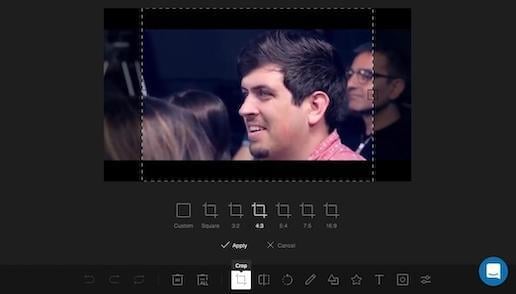
Stylize your images
Image Editor
To crop, resize or color your images, there is an inbuilt image editor.
- No external photo editing tools required
Automated TOC & Page Numbers
Table of Contents & Page Numbering
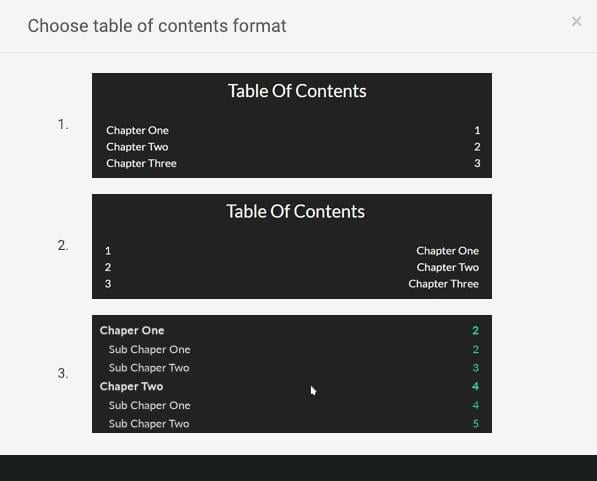
With 1 Click, Designrr will create your table of contents for your ebook, including page numbering and customizable headers and footers.
- The Table Of Contents generator also handles nested headers so users can navigate to anywhere in the document
- Pages are numbered automatically and can be customized to your color scheme
- All links are clickable
For Writing Your Content
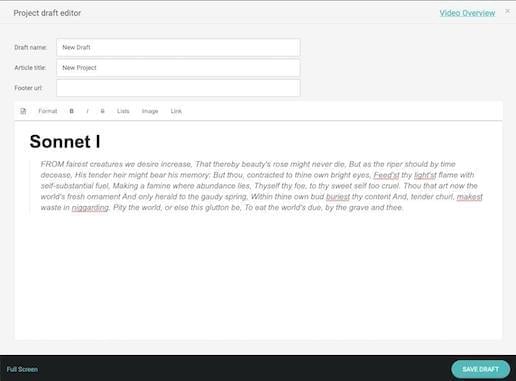
Project Draft Editor
When your content is not ready for design or you want to start from scratch. We provide a simple, clean editor for writers. No distractions, no complications. Just for writing and editing.
- The Draft editor is also ideal when you want to copy and paste content from anywhere
- You can import multiple drafts into your ebook
How to Use These eBooks
With Designrr You Just...
Import your content, select a template, change the cover image and generate PDF. That's it! Nothing more is needed.
BUT that's not all...
You also get these bonuses.
BONUS 1
FREE Commercial License Value: $497
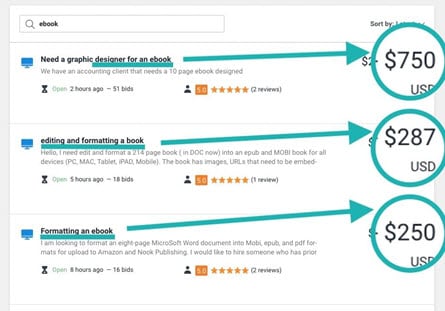
The commercial license allows you to create unlimited eBooks and sell them to clients with no fees or royalties to pay.
- All our designs will be provided to you, to re-use and re-sell to your clients.
- Sell ebook services online in marketplaces like Freelancer.com, Upwork & Fiverr.
BONUS 2
FREE Marketing eBook
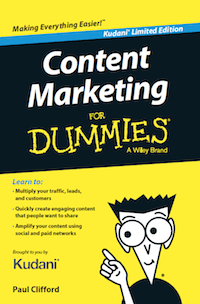
Get the digital edition of my book: Content Marketing For Dummies
This Book Outlines the PICASSO 5 Step Framework that Removes the Effort From Content Marketing. Whether your are a Brand, Small Business, Agency or Entrepreneur – This is for you!
How to get high quality, evergreen traffic without writing any content from scratch.
- Learn how to market your ebooks and your business online.
BONUS 3
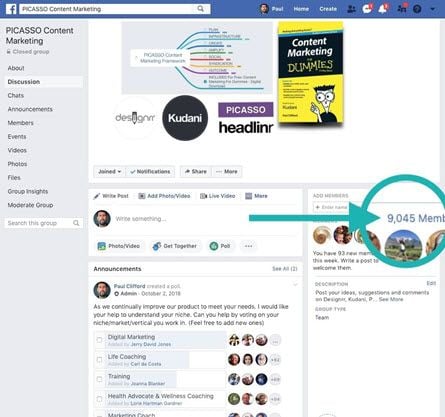
FREE Facebook Community & Coaching
Get Peer support, experience and advice from our 9000 member strong community.
- Weekly Livestreams covering various coaching topics, software features and implementation guides.
- Free personalized training. Simply leave a message in the support chat.
Join over 140,000 customers using Designrr ebook creator
I have been using Designrr for about a month and produced dozens of topic specific ebooks for my counselling and coaching clients for my Mens Health improvement organization. They love them and are quite useful for cutting the clutter from hundreds of websites.

Stephen Bennett
EntrepreneurI use Designrr for all my Ebooks now. Much faster than InDesign and user-friendly too.

Maryle Malloy
EntrepreneurDesignrr made it ridiculously easy for us to create and then publish an e-book that looked great, was easy to read, and looked incredibly professional. The tools included allowed us to quickly pull in the information we needed and sort it in a way that made the book flow. Editing the content was just as easy! We were able to drop in our own media as needed throughout the book and make it really stand out. Designrr has been a critical part of our success!

Nelson Ruger
artofnelson.comDesignrr works for me like a virtual editor -- I give it content and it gives the content a professional look and feel. This removed between 30% to 50% of my workload so I am able to get ebooks to the market faster. VERY HAPPY I found this!!!

Tamara Ann Follett
EntrepreneurWe were able to 3x our revenue by adding transcriptions as an option to our content services. The perceived value for the client is huge and we could charge more. The secret is by using Designrr we are able to save so much time the extra work is almost nothing.

Josh Clifford
LVRGDesignrr has saved us so much time in our business. We like to create blog posts and then repurpose them as PDFs on several other websites. It has been great for SEO. Using Designrr we've managed to spread our content everywhere and it takes about 10% of the time that it used to. It's an integral part of our business now.

Matt Wolfe
Hustle & Flow PodcastThe guys behind this product have an amazing after sales customer care service. I was dubious until I took a chance and went with them. I am so glad I did!
Roger Daniel
Radio PresenterStart growing with DESIGNRR today
Ready to create your first ebook in under 2 minutes?
Want to Learn More?
Get Started Now