The best Canva alternatives in 2026 are Adobe Express for all-around design, Visme for data visualization, VistaCreate for animation and video, Figma for collaborative UI work, and Designrr for turning your existing content into eBooks and lead magnets. Each one solves a specific problem that Canva doesn’t handle well — and some of them are cheaper or even free.
Now, Canva is still a great tool. Over 190 million people use it every month, and with Magic Studio, it now has AI image generation, background removal, text-to-video, and a writing assistant built right in. So why are so many people still looking for something else?
Short answer: price hikes, AI credit limits, and template fatigue.
Canva Pro jumped to $15 per month. The Teams plan got a major price increase in late 2024. And if you’re using AI features heavily, you’ll burn through your 500 monthly credits faster than you’d expect — with no way to choose which AI model runs in the background. On top of that, when millions of people use the same templates, your designs start looking like everyone else’s. Sound familiar?
This guide covers 12 tools that do specific things better than Canva does right now. Not five years from now. Right now. Whether you’re trying to cut costs, need deeper AI tools, or just want something built for your exact workflow, there’s something here for you.
Quick Comparison: All 12 Alternatives at a Glance
Before we get into the details, here’s the full picture. Bookmark this table so you can come back to it.
|
Tool |
Price From |
Free? |
AI Features |
Best For |
|
Adobe Express |
$9.99/mo |
Yes |
Adobe Firefly |
Best overall Canva replacement |
|
VistaCreate |
$10/mo |
Yes |
Basic AI |
Animation and video content |
|
Visme |
$12.25/mo |
Yes |
AI charts + design |
Data visualization and reports |
|
Figma |
$12/editor/mo |
Yes |
AI prototyping |
Collaborative UI/UX design |
|
Snappa |
$15/mo |
Yes |
None |
Fast social media graphics |
|
Piktochart |
$14/mo |
Yes |
AI infographics |
Infographics and visual reports |
|
Kittl |
$10/mo |
Yes |
AI text effects |
Typography, logos, and print |
|
Pixlr |
$4.90/mo |
Yes |
AI photo editing |
Photo editing on a budget |
|
Beautiful.ai |
$12/mo |
Trial |
Smart layouts |
AI-powered presentations |
|
Microsoft Designer |
Free |
Yes |
DALL-E built in |
Free AI graphics for M365 users |
|
Simplified |
$9/mo |
Yes |
AI writer + design |
All-in-one content creation |
|
Designrr |
$29/mo |
Trial |
AI formatting |
eBooks and lead magnets |
Why Are So Many People Switching Away from Canva?
Let’s be real. Canva works fine for a lot of things. But “fine” doesn’t mean it’s the best option for your specific situation. Here are the five biggest reasons people are making the switch right now.
Your costs keep creeping up. Canva Pro is $15 a month. If you have a team of five on the Teams plan, you’re looking at $600 a year. That’s real money — especially when Adobe Express gives you a comparable experience starting at $9.99, and VistaCreate charges just $10 a month. Are you actually using enough premium features to justify that cost? If you’re not sure, that’s your answer.
AI credits run out too fast. Magic Studio is genuinely impressive. But 500 credits a month sounds generous until you realize that generating images, removing backgrounds, and using AI writing all pull from the same pool. If you’re creating content daily, you could hit your limit halfway through the month. And then what? You wait.
Your designs look like everyone else’s. Have you ever scrolled through Instagram and seen three different brands using the same Canva template with different colors? That’s the downside of 190 million users sharing a template library. If your brand needs to stand out visually, you need either more customization or a less saturated template ecosystem.
You need something Canva wasn’t built for. Maybe you’re creating detailed infographics with live data. Maybe you need to turn blog posts into eBooks automatically. Maybe your team needs real-time collaborative design with version control. Canva does a little of everything, but it doesn’t go deep on anything. If your work demands depth, a specialized tool will save you time and frustration.
You can’t automate anything. Canva still doesn’t offer a proper API for programmatic design generation. If you need to create hundreds of variations automatically, integrate with Zapier or Make for design workflows, or build design into your product, you’re stuck doing everything manually.
1. Adobe Express — Best Overall Canva Alternative
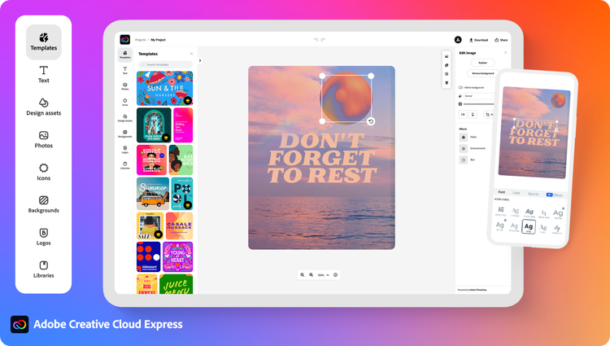
If you’re looking for one tool to replace Canva entirely, Adobe Express is the place to start. It’s the most frequently recommended alternative across major review sites in 2026, and for good reason.
The editor feels familiar. Drag-and-drop, templates for every format, stock photos and videos built in. But what makes Express different is the Adobe ecosystem behind it. If your team uses Photoshop, Illustrator, or Lightroom, those assets flow directly into Express. No exporting. No re-uploading. Just open and use.
Even if you don’t use other Adobe tools, Express holds up on its own. Here’s what you get:
- 190,000+ free templates — not as many as Canva’s 1.6 million, but they’re high quality and less overused
- Adobe Firefly AI — trained on licensed content, so your AI-generated images are commercially safe to use without worrying about copyright issues
- Full stock library — Adobe Stock integration means you’re not stuck with the same free photos everyone else is using
- Video editing — trim, add text, apply effects, and resize for different platforms, all inside the editor
The free plan is genuinely useful. You get Adobe Fonts, basic AI tools, and thousands of templates without paying anything. The premium plan starts at $9.99 per month — that’s $5 less than Canva Pro.
So here’s the real question: are you paying $15 a month for Canva when you could get comparable features for $10? If your answer is “I’m not sure,” it’s worth signing up for the Express free plan and testing it yourself. You might not go back.
The catch: Fewer templates than Canva, and the interface has a slight learning curve if you’re used to Canva’s layout. But most people adjust within an hour.
2. VistaCreate — Best for Animation and Video
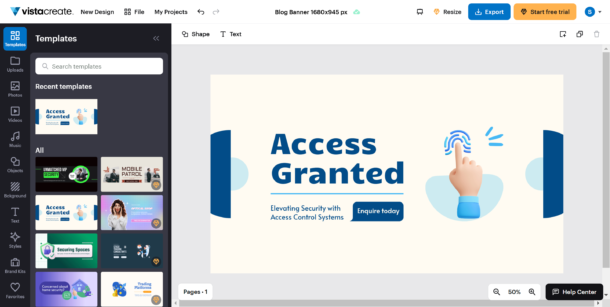
VistaCreate used to be called Crello, and it was basically built to be the closest thing to Canva without being Canva. The interface is almost identical. If you can use Canva, you can use VistaCreate without any learning curve at all.
But VistaCreate isn’t just a clone. It actually does a few things better.
Animation is the big one. Canva’s animation options are basic — fade in, pop, a handful of preset effects. VistaCreate gives you layered motion, text animations, and transition effects that look genuinely professional. If you’re creating content for Instagram Stories, TikTok, or LinkedIn and you want something that catches the eye while scrolling, this is where VistaCreate earns its keep.
The video editor is also more capable. You can trim clips, add overlays, include transitions, and produce short-form video without switching to a separate tool. For social media managers who spend half their day in Canva and the other half in a video editor, VistaCreate consolidates that into one workflow.
Pricing: The free plan covers basic needs. Pro is $10 per month. That’s $5 cheaper than Canva Pro, and you’re getting better animation and video tools. For a lot of creators, that math is hard to argue with.
The catch: Collaboration features aren’t as strong as Canva’s. If your team relies on shared workspaces, approval flows, and real-time co-editing, VistaCreate might feel limited. The AI tools are also more basic — no equivalent to Magic Studio yet.
3. Visme — Best for Data Visualization and Interactive Content
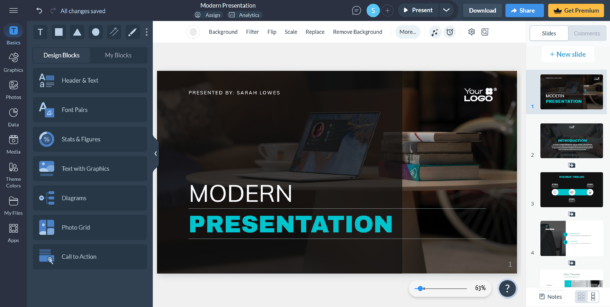
Do you regularly create reports, infographics, or presentations that are packed with data? If so, Visme is probably the tool you didn’t know you needed.
Canva has charts. Basic ones. Bar graphs, pie charts, simple line charts. Visme has over 40 chart and graph types, including pictograms, radial charts, funnel diagrams, heat maps, progress bars, and 3D animated data widgets. It’s not even close.
But the data visualization is just one part of it. What really sets Visme apart is interactivity. You can add hover effects, clickable popups, quizzes, and embedded links directly into your designs. Imagine sending a pitch deck to a client where they can hover over a data point and see the details, or click through an interactive product walkthrough. That’s what Visme makes possible.
The brand kit feature is solid too. Store your logo, fonts, and color palette in one place, and apply them across every project with a click. The Dynamic Fields feature lets you update a single data point and have it change everywhere it appears across multiple projects. If you manage multiple brands or clients, that alone saves hours.
Visme integrates with HubSpot, Salesforce, Zapier, Slack, and Google Analytics. Pricing starts free, with the Starter plan at $12.25 per month and Business at $24.75 per month. Students, educators, and nonprofits get discounted rates.
The catch: There’s a real learning curve. Visme is more complex than Canva, and if all you need is quick social media graphics, it’s overkill. The price is also higher. But if your work involves turning numbers into stories, it’s worth every dollar.
4. Figma — Best for Collaborative Design Teams
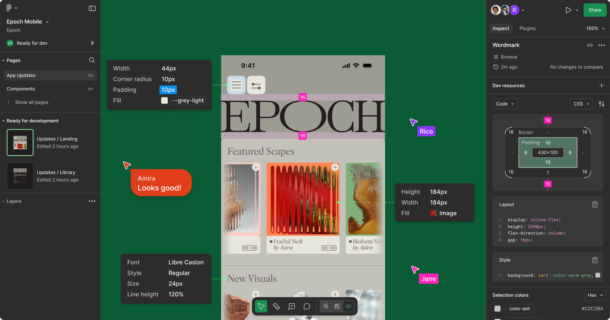
Figma isn’t really a Canva alternative in the traditional sense. It’s a professional design platform. But it shows up on every “Canva alternatives” list because a lot of teams outgrow Canva and need somewhere to go next.
The reason Figma dominates collaborative design is simple: multiple people can work on the same file at the same time. Not “share a link and take turns.” Actually working, simultaneously, in the same canvas. You can see each other’s cursors, leave comments, and iterate in real time. For product teams, design agencies, and startups where speed matters, this changes everything.
Figma gives you vector editing, component libraries, responsive layout controls, and prototyping tools that let you build interactive mockups. FigJam, the whiteboarding companion, is great for brainstorming and planning.
The free plan supports three active projects with unlimited personal files. That’s generous enough for freelancers and small teams. The Professional plan is $12 per editor per month.
The catch: If you just need social media graphics or marketing materials, Figma is way too much tool. It’s built for UI/UX design and product work. The learning curve is steep. But if your team has outgrown Canva’s limitations on collaboration and design control, Figma is where you go.
5. Snappa — Best for Getting Graphics Done Fast
Here’s a question: how much of your time in Canva is spent actually designing, and how much is spent clicking through menus, resizing elements, and scrolling through templates you’ll never use?
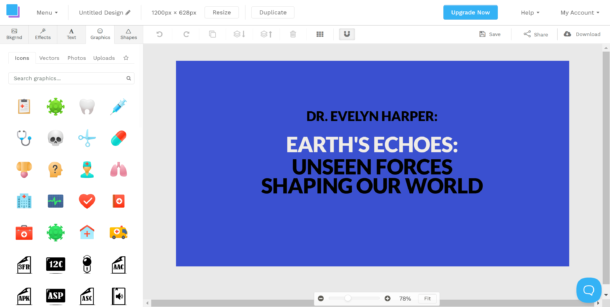
Snappa strips all of that away. The interface is deliberately simple. Templates are pre-sized for every major platform. You pick one, swap in your text and images, adjust the colors, and you’re done. The whole process takes minutes, not an hour.
Once your graphic is ready, you can publish it directly to your social channels. Buffer integration, direct posting to Facebook, X (formerly Twitter), and LinkedIn — no downloading, no switching tabs, no uploading to another tool. It’s the fastest path from “I need a graphic” to “it’s live.”
The free plan gives you five downloads per month with access to 6,000+ templates and 5 million stock photos. Pro is $15 per month with unlimited downloads and custom fonts.
The catch: Snappa does one thing well, and everything else it doesn’t do at all. No animation. No video. No AI. The template library is much smaller than Canva’s. But if speed is your priority and you’re mostly creating social media posts and blog graphics, Snappa saves you real time every single day.
6. Piktochart — Best for Infographics
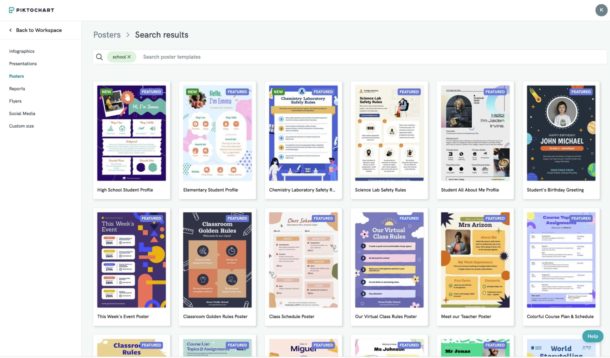
If you create infographics more than once or twice a month, you’ve probably felt Canva’s limitations. Fixed canvas dimensions, basic chart tools, clunky data import. Piktochart was built to solve exactly this.
The platform handles long-form vertical content natively, which is how most infographics are actually consumed. You can import data directly from spreadsheets and generate visualizations automatically. The AI infographic generator creates a first draft from your data or text, which you then customize — a workflow that saves significant time when you’re producing these regularly.
Beyond infographics, Piktochart has expanded into presentations and poster design. It’s not as broad as Canva, but within its niche, the tools are deeper and more purposeful.
Free plan available. Pro is $14 per month with premium templates, brand customization, and high-res exports.
The catch: This is a niche tool. If infographics and data reports aren’t a regular part of your workflow, you probably don’t need it. Visme covers similar ground with a broader feature set, so consider what else you need before choosing between them.
7. Kittl — Best for Typography, Logos, and Print
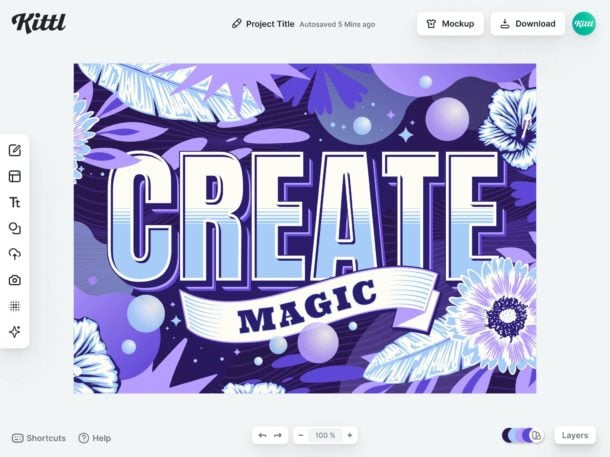
Kittl is the tool that designers get excited about. It’s built around typography and print design, and the text tools go far beyond anything Canva or most other platforms offer.
You can warp text along custom paths, apply complex layered effects, create vintage-style lettering, and generate AI-assisted designs that would normally take hours to build manually. If you’re designing logos, merchandise, packaging, posters, or anything where the text is the design, Kittl gives you creative control that Canva just doesn’t.
The illustration library is curated and high quality. The export options are optimized for print, so you’re not stuck with 72dpi web-resolution files when you need something for a physical product.
Free plan includes many templates and basic AI. Pro starts at $10 per month with higher-res exports and commercial licensing.
The catch: Not a general-purpose design tool. No social media templates, no video editor, no presentation mode. Kittl is a specialist, and if typography and print aren’t central to your work, you won’t need it.
8. Pixlr — Best Free Photo Editor
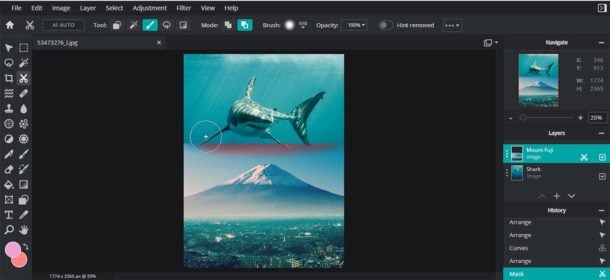
Have you ever tried to do serious photo editing in Canva? Crop, maybe add a filter, and that’s about it. If you need layers, masks, advanced adjustments, or precise retouching, Canva just isn’t built for it.
Pixlr is. It’s basically a lightweight Photoshop that runs in your browser. Pixlr X handles quick edits. Pixlr E gives you the full layer-based experience with advanced tools, blending modes, and precise control. AI features include background removal, object erasing, and batch editing.
And the pricing is hard to beat:
- Free plan covers most casual editing needs
- Plus plan is just $4.90 per month
- Premium is $14.99 per month with expanded AI credits and priority processing
The catch: Pixlr is a photo editor, not a design platform. It doesn’t have templates, social media presets, or the marketing-focused features you use Canva for. Think of it as a complement to your design tool, not a replacement for it.
9. Beautiful.ai — Best for Presentations on Autopilot
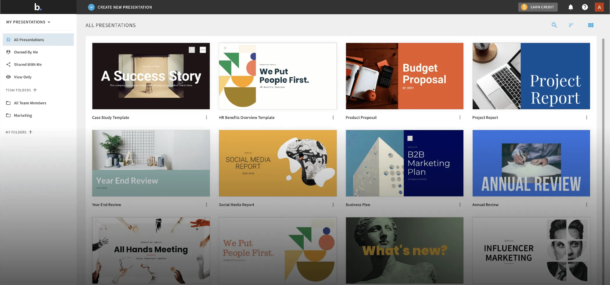
How much time does your team spend making slides look consistent? Fixing alignment, adjusting spacing, making sure fonts match across 40 slides? Beautiful.ai automates all of that.
Instead of a blank canvas, you get smart layouts that adapt as you add content. Type your text, drop in an image, and the layout adjusts automatically. Spacing, alignment, sizing — it all just works. The result is a polished, professional deck without anyone touching a ruler tool.
For teams that create weekly reports, client presentations, or sales decks, this adds up to hours saved every month. The AI doesn’t just suggest layouts. It actively restructures your content to look better as you work.
Pro starts at $12 per month. Team plan adds shared slide libraries, brand controls, and collaboration features.
The catch: The automation limits your creative control. You can’t freely drag elements wherever you want, which frustrates experienced designers. No free plan — just a trial. And it only does presentations, nothing else.
10. Microsoft Designer — Best Free AI Design Tool
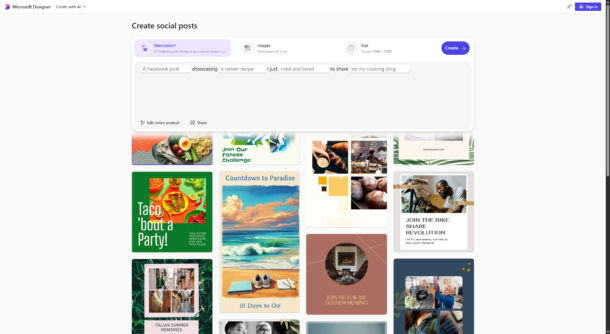
If you have a Microsoft account, you already have access to Microsoft Designer. It’s completely free, and it’s better than most people expect.
Designer uses DALL-E to generate graphics from text prompts. Describe what you need — a social media post, an invitation, a poster — and it produces several options you can customize. The results integrate naturally with PowerPoint, Word, and the rest of the Microsoft 365 ecosystem.
Is it as powerful as Canva? No. The template library is smaller, the customization is more limited, and the editor feels basic by comparison. But for quick AI-generated visuals at zero cost, it’s a genuinely useful tool that most people overlook.
The catch: Still maturing. The editing tools after generation are limited, and you won’t find the depth of templates or assets that Canva or Adobe Express offer. Best used for quick, one-off graphics rather than ongoing brand design.
11. Simplified — Best All-in-One Content Platform
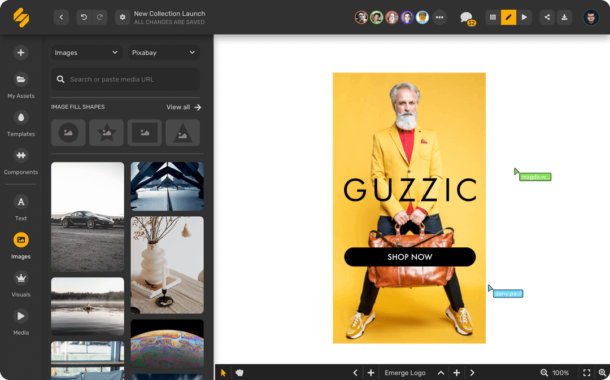
Do you use one tool for graphics, another for copywriting, another for video, and yet another for scheduling? Simplified tries to put all of that in one place.
The design tools are comparable to Canva’s basics — templates, stock library, drag-and-drop editor. But what you also get is an AI writing assistant that generates captions, blog content, and ad copy right alongside your designs. Plus a social media scheduler that lets you plan and publish across platforms from the same dashboard.
The idea is consolidation. Instead of paying for Canva, plus ChatGPT, plus Buffer, you pay $9 per month for Simplified and get a usable version of all three.
The catch: Jack of all trades, master of none. The design features aren’t as deep as Canva. The AI writing isn’t as strong as dedicated tools. The video editor is basic. But if you’re a solopreneur or a small team trying to cut subscriptions, the math might work in your favor.
12. Designrr — Best for eBooks, Lead Magnets, and Content Repurposing
Now, you might be thinking – “doesn’t Canva already have an eBook creator? Why would I need another tool for that?”
It’s a fair question. And it’s true, Canva does have an eBook template. But if you’ve ever tried to use it for anything more than the most basic eBook, you’ve probably run into some frustrations.
Canva’s eBook creator is a prime example of the “master of none” downside to all-in-one tools. It’s clunky, time-consuming, and lacks key features that make the eBook creation process smooth and efficient, like:
- Automatic import and formatting of your existing content
- Dynamic table of contents generation
- Customizable templates optimized for lead magnets and content upgrades
| Content Type | Designrr Magic Result |
|---|---|
| Blog posts | Transformed into a polished eBook or whitepaper. |
| LinkedIn articles | Compiled into a professional-looking “Ultimate Guide” PDF. |
| Podcast episode series | Converted into web pages or a downloadable resource with transcripts. |
| YouTube video scripts | Repurposed as an eBook companion or standalone visual content. |
Trying to create a polished, professional eBook or lead magnet in Canva often involves a lot of manual copying and pasting, fiddling with layouts, and wrestling with design elements. It’s doable, but it’s far from efficient.
That’s where Designrr really shines. It’s built specifically for the purpose of repurposing existing content into high-quality eBooks, reports, and lead magnets, with features that streamline the entire process:
Automatic import and formatting of blog posts, videos, and more
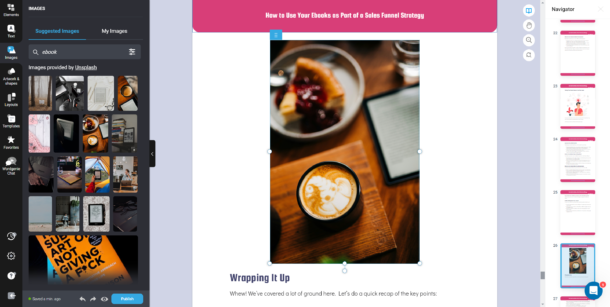
Designrr can pull in your existing content from a variety of sources – Google Docs, your website, even YouTube video descriptions – and automatically format it into a professional eBook or report layout. No more copying and pasting or fighting with text formatting.
Dynamic table of contents and page numbering
Designrr automatically generates a table of contents based on your chapter titles and headings, and keeps page numbers updated even as you edit and rearrange your content. It’s a huge time saver and ensures your eBook always looks polished and professional.
Templates optimized for lead generation
Designrr’s templates are designed with lead magnets and content upgrades in mind. They’re optimized for easy consumption and engagement, with visual layouts that draw the reader in and keep them scrolling.
While Canva’s eBook templates are fine for basic projects, they lack the strategic element that Designrr’s templates provide. With Designrr, you’re not just creating an eBook – you’re creating a powerful lead generation tool.
So if you’ve ever found yourself frustrated with Canva’s limitations when it comes to eBook creation and content repurposing, Designrr is absolutely worth checking out. It takes all the pain points out of the process and allows you to create assets that not only look great, but also convert.
Output your repurposed content in multiple formats
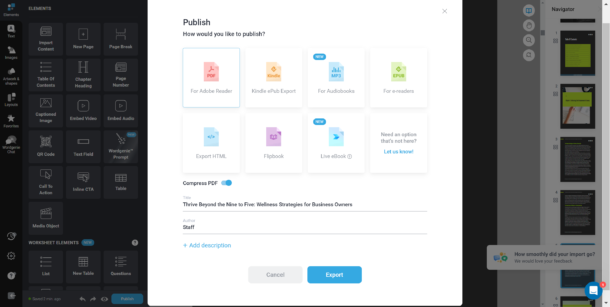
Designrr lets you export your eBook or report in multiple formats – PDF, web page, even audio – giving you flexibility in how you deliver it to your audience. Whether you want to use it as a downloadable lead magnet, a content upgrade on your blog, or a scripted video, Designrr makes it easy.
While there is a bit of a learning curve with Designrr’s customization options, it’s well worth the effort for the time and headache it saves you in the long run. If you’re serious about content repurposing and lead generation, it’s an indispensable tool to have in your kit.
So if you’ve been struggling to keep up with the demands of creating fresh lead magnets and content upgrades, give Designrr a try. It just might become your secret weapon for churning out high-converting assets on the fly.
Read our full Canva vs Designrr comparison for more information
Check out Designrr’s special offer today!
So Which One Should You Actually Pick?
It depends on what’s frustrating you about Canva right now. Not in theory. Right now. Here’s a quick way to think about it:
|
If your main problem is… |
Start with… |
|
Canva costs too much and you want similar features for less |
Adobe Express (free plan or $9.99/mo) or VistaCreate ($10/mo) |
|
Your social media content looks the same as everyone else’s |
VistaCreate for animation, Kittl for typography |
|
You need to create data-heavy reports and infographics |
Visme for interactive data, Piktochart for infographics |
|
Your team needs real-time design collaboration |
Figma — it’s the industry standard for a reason |
|
You just need social graphics done fast, no extras |
Snappa — built for speed and nothing else |
|
You need better photo editing than Canva offers |
Pixlr — full editor in your browser for $4.90/mo |
|
Presentations eat up too much of your team’s time |
Beautiful.ai — AI handles the layout so you don’t have to |
|
You want a free AI design tool and you use Microsoft 365 |
Microsoft Designer — free and surprisingly capable |
|
You have content that should be eBooks and lead magnets but isn’t |
Designrr — built specifically for content repurposing |
Most of these tools have free plans or trials. Don’t just read about them. Pick the one that fits your biggest pain point and try it today. You’ll know within 30 minutes whether it’s a fit.
Final Thoughts
Canva isn’t going anywhere. It’s a solid tool, and for a lot of people, it’s still the right choice. But the landscape has changed. AI features are everywhere. Prices have shifted. And specialized tools have gotten genuinely good at the things Canva only does okay.
The question isn’t whether Canva is bad. It’s whether you’re paying for a Swiss Army knife when what you actually need is a scalpel. And right now, in 2026, there’s a scalpel for almost every design job you can think of.
Try one. See if it sticks. Your workflow will thank you.
Frequently Asked Questions About Canva Alternatives
Get answers to the most common questions about switching from Canva to a better design tool for your needs
What is the best overall alternative to Canva in 2026?
Adobe Express is widely considered the best overall Canva replacement in 2026. It offers a familiar drag-and-drop editor, 190,000+ templates, Adobe Firefly AI for commercially safe image generation, and full Adobe Stock integration. The free plan is genuinely useful, and the premium plan starts at $9.99 per month — $5 less than Canva Pro. If you already use other Adobe tools like Photoshop or Illustrator, your assets flow directly into Express without any exporting or re-uploading.
Why are people switching away from Canva?
The most common reasons include rising costs (Canva Pro is now $15/month with significant Teams plan price increases), AI credit limitations (500 monthly credits that deplete quickly with daily use), template fatigue from 190 million users sharing the same designs, lack of depth in specialized areas like data visualization or eBook creation, and no proper API for automating design workflows. Many users find that specialized tools handle their specific needs better and often cost less.
What is the cheapest Canva alternative with similar features?
For paid plans, Pixlr offers the lowest entry point at just $4.90 per month for photo editing. For a full design platform comparable to Canva, Adobe Express at $9.99 per month and VistaCreate at $10 per month are the most affordable options. Microsoft Designer is completely free if you have a Microsoft account and includes DALL-E AI image generation. Many of the other alternatives also offer robust free plans that cover basic design needs without any cost at all.
Which Canva alternative is best for social media content?
It depends on what type of social media content you create. For animated and video content on Instagram Stories, TikTok, or LinkedIn, VistaCreate offers superior animation tools with layered motion, text animations, and professional transition effects — all for $10 per month. If you need fast, simple static graphics, Snappa is purpose-built for speed with direct publishing to social channels. For an all-in-one solution that combines design, AI copywriting, and social scheduling, Simplified covers all three for $9 per month.
What’s the best tool for creating data-heavy reports and infographics?
Visme is the top choice for data visualization, offering over 40 chart and graph types including pictograms, radial charts, funnel diagrams, heat maps, and 3D animated data widgets. It also supports interactive elements like hover effects, clickable popups, and embedded links. For dedicated infographic creation, Piktochart handles long-form vertical content natively and can generate first drafts from your data using AI. Visme is the broader platform (starting at $12.25/month), while Piktochart ($14/month) is more focused on infographics specifically.
Can I turn my blog posts and existing content into eBooks without Canva?
Yes — Designrr is built specifically for repurposing existing content into professional eBooks, lead magnets, and reports. Unlike Canva’s basic eBook templates, Designrr can automatically import and format content from blog posts, Google Docs, YouTube video descriptions, and more. It generates dynamic tables of contents, handles page numbering automatically, and offers templates optimized for lead generation. You can export in multiple formats including PDF, web page, and audio. Pricing starts at $29 per month.
Is Figma a good replacement for Canva?
Figma is an excellent next step if your team has outgrown Canva’s collaboration and design control limitations, but it’s not a direct replacement. Figma excels at real-time collaborative design where multiple people work simultaneously on the same canvas with vector editing, component libraries, and prototyping tools. However, it’s built for UI/UX design and product work — not quick social media graphics or marketing materials. The learning curve is steep, so it’s best suited for design teams, agencies, and startups that need professional-grade design tools. The free plan supports three active projects.
Which alternative has the best AI features?
Adobe Express stands out with Adobe Firefly, which is trained on licensed content so your AI-generated images are commercially safe. Microsoft Designer offers free DALL-E-powered image generation from text prompts. Beautiful.ai uses AI to automatically handle slide layouts, spacing, and alignment for presentations. Simplified combines AI design with an AI writing assistant for captions, blog content, and ad copy. For AI-powered data visualization, Visme offers AI-generated charts, while Piktochart has an AI infographic generator that creates first drafts from your data.
What’s the best free Canva alternative?
Microsoft Designer is the strongest completely free option — it includes DALL-E AI image generation and integrates with the Microsoft 365 ecosystem at no cost. Beyond that, most alternatives offer useful free plans: Adobe Express gives you access to Adobe Fonts, basic AI tools, and thousands of templates; Figma’s free plan supports three active projects with unlimited personal files; VistaCreate, Pixlr, Piktochart, and Kittl all have free tiers that cover basic design needs. The best choice depends on your specific workflow.
How do I choose the right Canva alternative for my needs?
Start by identifying your biggest frustration with Canva. If cost is the issue, try Adobe Express or VistaCreate. If your designs look generic, explore Kittl for typography or VistaCreate for animation. For data-heavy work, choose Visme or Piktochart. If team collaboration is the bottleneck, move to Figma. For speed, try Snappa. For presentations, Beautiful.ai saves hours. For content repurposing into eBooks and lead magnets, Designrr is purpose-built for that. Most tools offer free plans or trials, so test your top pick for 30 minutes — you’ll know quickly whether it fits.