The ideal ebook length for a lead magnet is 2,000 to 5,000 words, or roughly 10 to 25 pages. That range is long enough to deliver real value and short enough that a real person with a real inbox will actually read it. Go longer and you are asking cold audiences to commit time they have not budgeted; go shorter and the content often performs better repackaged as a checklist or cheat sheet.
That range converges across multiple sources: Podia recommends approximately 2,000 words based on Medium’s reader engagement data; Heights Platform puts the practical range at 5 to 20 pages; a GetResponse survey of 790 marketers conducted in 2020 found that 58.6% of respondents reported higher conversion rates with short-form written content over long-form guides; and NetLine’s 2025 B2B Content Consumption Report shows that even as B2B ebook demand is growing, the formats tied to the strongest purchase intent are shorter and more action-oriented. The rest of this guide explains when to adjust that range, how to structure what goes inside, and what has shifted in 2024 and 2025 that makes some older advice on this topic worth reconsidering.
Sign up for Designrr’s special offer today!
Why Ebook Length Is the Wrong First Question — and the Right Place to Start

Most people searching for ebook length guidance are dealing with a lead magnet that is not converting the way they expected. In the majority of cases, the page count is a symptom, and the real problem sits elsewhere: the topic is too broad, the audience is too loosely defined, or the offer does not match where the reader is in their decision-making process.
Think of a lead magnet ebook the way a good barista thinks about a pour-over. The right cup is not just about how much coffee goes in. Grind size, water temperature, pour speed, and bean selection for the brew method all matter. Get any one of those wrong and the quantity of coffee becomes irrelevant. Ebook length works the same way — it is one variable inside a larger system, and optimizing it without addressing the others produces limited results.
Length still matters, though, because it is the first judgment a reader makes about how much this exchange will cost them. A 45-page ebook communicates that downloading it means setting aside a free afternoon. A 12-page guide communicates that the answer is 15 minutes away. According to GetResponse’s 2020 lead magnet study of 790 marketers, 58.6% of respondents reported higher conversion rates with short-form written content — newsletters, checklists, and ebook samples — over comprehensive long-form guides. The practical implication is that most lead magnet ebooks underperform because the people who downloaded them felt the implied time commitment before they opened the file, and that friction is established by page count before a single word is read.
This guide covers the research-backed length range, how that range adjusts for audience temperature and funnel stage, the internal structure that drives completion rates, how ebooks compare against other lead magnet formats on conversion, the benchmarks worth knowing, the most common execution mistakes, and the specific changes from 2024 and 2025 that affect how this format should be used today.
What the Research Actually Says About Ideal Ebook Length
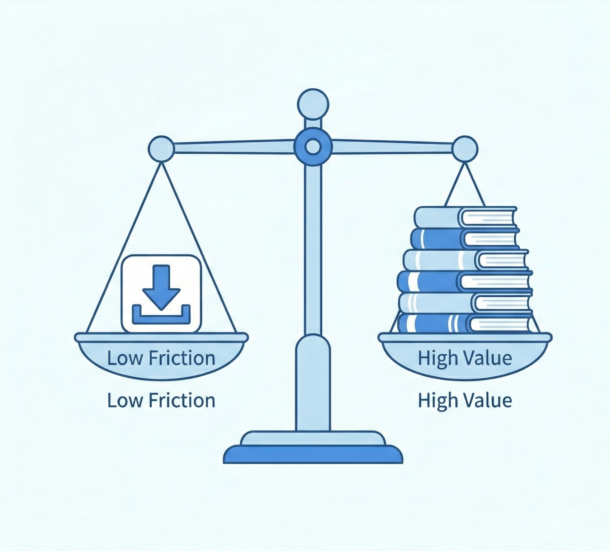
The research consensus lands on 10 to 25 pages, or 2,000 to 5,000 words, as the range that balances perceived value against the friction of reading. The sources that contribute to this range each approach the question differently, and they align more closely than you might expect.
Podia recommends approximately 2,000 words, citing Medium’s data showing reader engagement peaking around a 7-minute read before dropping off. Heights Platform puts the practical range at 5 to 20 pages, with an emphasis on solving one focused problem. Beacon’s conversion analysis recommends a hard cap around 30 pages, which it describes as the equivalent of five or six average blog posts, beyond which completion rates deteriorate meaningfully. Blog Marketing Academy takes the most direct position, arguing that ebooks should be consumable in minutes, not hours, and that long ebooks primarily attract what they call information collectors, readers who download without intent to buy.
Once an ebook crosses 30 pages, it stops functioning as a lead magnet in the psychological sense and starts functioning as a research assignment, which cold audiences are not ready to take on from a brand they have just encountered.
A practitioner writing in Better Marketing documented a direct A/B test that illustrates this clearly. Replacing an ebook with a one-page checklist on the same topic pushed signup rates from 2.1% to 8.6%, a nearly 4x improvement with no change in traffic. The result is a lesson in specificity: shorter formats force the creator to solve one problem precisely, while longer formats tend to fill available space with tangential content that dilutes the core value proposition. The writer building a 10-page guide cannot afford to be vague; the writer building a 40-page guide almost always is.
The Four Variables That Should Determine Your Actual Page Count
The 10-to-25-page range is a reasonable default, but four factors should move your target within or outside that range: how warm or cold your audience is, where the lead magnet sits in your funnel, whether you are targeting B2B or B2C readers, and the nature of the problem the ebook solves.
Audience Temperature
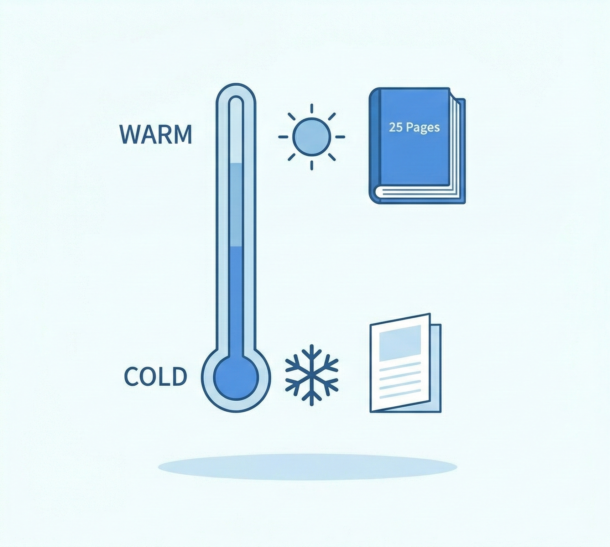
Cold traffic — first-time visitors arriving from a paid ad or organic search — have approximately 47 seconds of focused attention available to evaluate your lead magnet before they decide whether to engage or leave. That figure comes from Professor Gloria Mark’s research at UC Irvine, which tracked average screen-based attention falling from 2.5 minutes in 2004 to 47 seconds by 2024, and is independently cited in Unbounce’s 2024 Conversion Benchmark Report. For these audiences, a 5-to-12-page focused guide or cheat sheet will consistently outperform a 25-page comprehensive resource. Longer formats require a level of trust that cold audiences have not yet extended.
Warm audiences, meaning people who have engaged with your blog, watched a video, or been on your email list, are in a different position. They have already invested time in your ideas and are willing to invest more. A 15-to-30-page ebook with a real framework, original case studies, and substantive analysis is appropriate at this stage, and in some categories, a shorter asset can actually feel insufficiently rigorous for an audience that expects depth.
Funnel Stage
Top-of-funnel lead magnets should run 5 to 12 pages and be built for fast consumption. Middle-of-funnel educational assets can run 12 to 30 pages for audiences who are actively researching solutions. Bottom-of-funnel assets are rarely ebooks at all. Case studies, comparison guides, and ROI calculators tend to outperform ebooks at the point where someone is close to a purchase decision because those formats directly address the questions buyers ask at that stage.
B2B vs. B2C Audiences
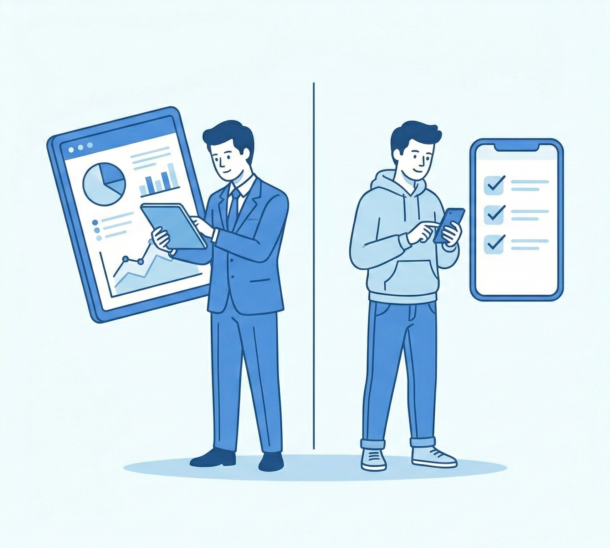
The distinction between B2B and B2C matters more here than most ebook guides acknowledge. According to NetLine’s 2025 State of B2B Content Consumption and Demand Report, B2B ebook registrations grew 71.4% year-over-year, and ebooks accounted for 53.3% of all content demand on the platform. Each ebook asset generated an average of 983 registrations, compared to just 59.5 for white papers. B2B buyers approach ebooks as part of a deliberate research process. A 15-to-30-page resource is entirely appropriate when the content contains original data, proprietary frameworks, or analysis tied to a specific industry challenge.
B2C audiences encounter lead magnets in a different context. They are rarely in research mode when they first see your offer. For consumer categories — health and fitness, personal finance, lifestyle — anything over 10 to 15 pages with dense text has a high probability of being saved to a folder and never opened. A focused 8-page guide that delivers one concrete, actionable outcome will outperform a 30-page comprehensive resource for cold consumer traffic in most head-to-head tests.
The Nature of the Problem
The format should match what the problem actually requires. A checklist is the right tool for a tactical problem with clear, repeatable steps. An ebook earns its length when the reasoning behind the steps matters as much as the steps themselves. If a reader could execute without understanding the underlying logic, a checklist or template is almost always the more effective format. Build the shorter asset first and expand only when the problem genuinely demands it.
How to Structure the Inside of Your Ebook Lead Magnet
The page count is only one part of the equation. Many lead magnets fail not because they are the wrong length, but because the content inside is poorly organized, starts too slowly, or ends without telling the reader what to do next. The structure below addresses each of those failure points.
The Cover Page
Your cover functions as a conversion asset before the reader has seen a single line of your writing. A weak cover — cluttered layout, vague title, inconsistent branding — signals low quality and undermines trust before the content has a chance to build it. A strong cover needs three elements: a short benefit-driven title, a subtitle that tells the reader specifically what they will be able to do after reading, and clean professional design that aligns with your brand.
Table of Contents With Clickable Links
For any ebook over eight pages, a clickable table of contents is essential. It signals that the content is organized, and it allows mobile readers to navigate directly to the section they need without scrolling through the entire document. Most ebook creators skip this element entirely, which is a meaningful usability gap given that the majority of lead magnet interactions now happen on mobile devices.
The Introduction Needs to Be One Page, Not Two
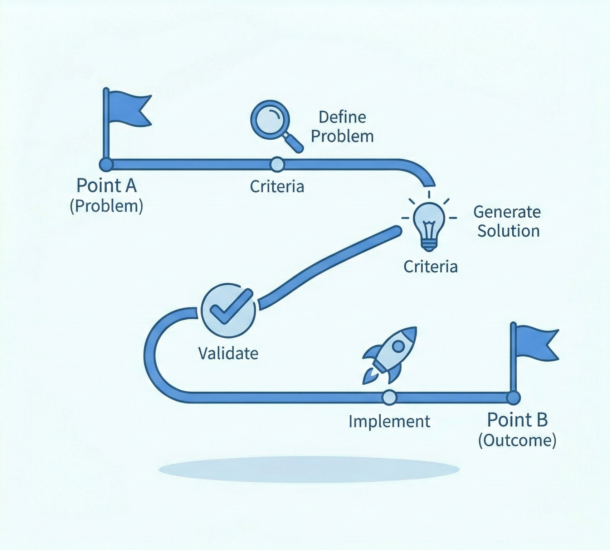
The introduction should be limited to one page and should focus entirely on the reader, not on the author. It needs to name the problem the reader is experiencing, state the specific outcome they will have achieved by the end of the ebook, and provide a single sentence of context explaining why you are qualified to deliver on that promise. Think of the introduction as a Point A to Point B contract: here is where you are now, and here is the specific state you will be in when you finish reading this.
Each Chapter Should Solve One Problem, Not Several
Structure each chapter the way you would structure a focused blog post. Every chapter addresses one sub-problem, delivers one actionable insight, and connects logically to the chapter before and after it. Three to seven chapters is the right range for most lead magnet ebooks. According to RichFunnels’ 2025 analysis, breaking content into 5-to-10-minute reading segments increases completed downloads by 40% and lifts subsequent lead conversions by 25%. Visual breaks — charts, lists, screenshots — placed every two to three paragraphs prevent the wall-of-text effect that causes readers to stop mid-chapter.
The Call-to-Action Page
The final page of your ebook should be dedicated entirely to the next step. Most creators either skip this page or relegate the CTA to a footer line at the end of the last chapter. That approach underserves both the reader and the funnel. A full CTA page tells the reader what to do next, makes the action obvious and low-friction, and connects the next step directly to the outcome the ebook just helped them achieve. The ebook serves its purpose as the entry point to a relationship, and the CTA page is where that relationship advances.
Contextual CTAs placed throughout the content, at the natural end of a relevant chapter or alongside a practical example, significantly increase the likelihood that a reader acts before reaching the final page. A reader who finishes chapter three and encounters a relevant next step is more likely to act on it than a reader who only encounters any invitation on page twenty-two.
Design and Readability Standards
Well-written content drives downloads. How the content is presented determines whether it gets read. A reader who opens a PDF with inconsistent fonts, cramped margins, and unbroken blocks of dense text will make a judgment about the quality of the advice before finishing the first page. That judgment is rarely favorable, and it is almost never reversed.
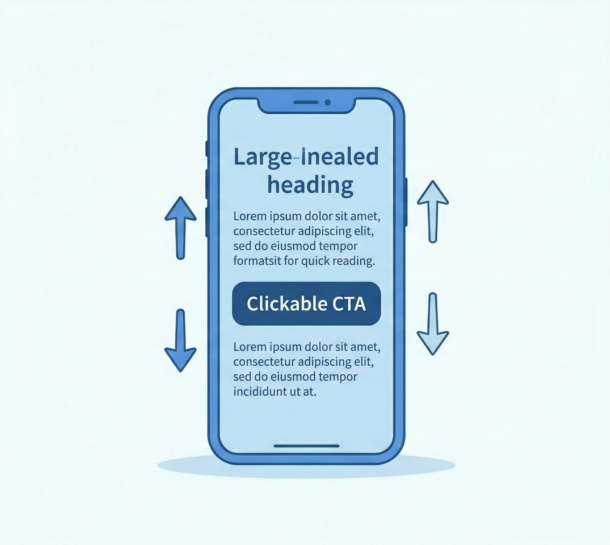
Body text should be a minimum of 11pt. Margins of at least half an inch create the breathing room that makes information feel readable rather than overwhelming. Keep file sizes under 5 MB for mobile delivery, as larger files introduce friction on slower connections and reduce download completion rates. Consistent brand colors, typography, and imagery signal professionalism and reinforce that the ebook is a legitimate asset, not an afterthought.
The most consistently underserved area in ebook design is mobile-first layout. More than 58% of lead magnet interactions now happen on mobile devices, but the majority of ebook templates are still designed for a desktop PDF experience. A document optimized for desktop viewing can be nearly unusable on a smartphone, with text that requires pinching to read, layouts that require horizontal scrolling, and hyperlinks too small to tap accurately. Mobile-optimized ebooks require single-column layouts, a minimum 12pt body text for phone screens, compressed file sizes, and hyperlinks with tap targets large enough to use without zooming.
How Ebook Lead Magnets Compare to Every Other Format
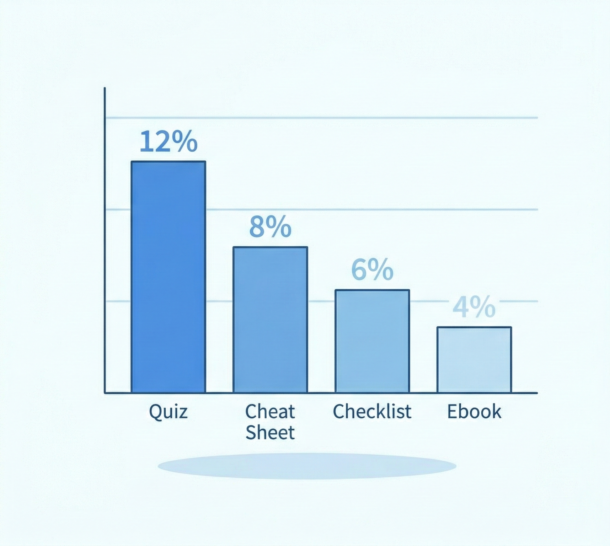
Before settling on a page count, it is worth asking whether an ebook is the right format at all. In a number of situations, it is not. Several formats consistently outperform ebooks on raw conversion rate, and knowing where ebooks sit in that field helps you make a clearer call on when to build one.
| Format | Conversion Rate | Source and Notes |
| Quiz / Assessment | 40.1% avg (start-to-lead) | Interact — lifetime data across 1B+ quiz views and 100M leads |
| Cheat Sheet / 1-Pager | ~34% | Leadpages user data |
| Checklist | ~27% | Leadpages user data |
| Ebook / Guide | ~24% | Leadpages user data |
| Webinar (long-form video) | Preferred by 70.2% of long-form video users | GetResponse 2020 survey — share of preference, not an opt-in rate |
Sources: Leadpages — 15 Ways to Create a High Value Lead Magnet; Interact Quiz Conversion Rate Report 2026; GetResponse Best Lead Magnets Study 2020
One clarification on the webinar row: the 70.2% figure from GetResponse’s 2020 survey reflects how many marketers who use long-form video said webinars were their top-performing format in that category. It is a share-of-preference stat within one format type, and should not be read as a standalone opt-in or landing page conversion rate. The Interact quiz figure, by contrast, comes from Interact’s own platform data across more than 1 billion quiz views and 100 million leads generated since 2013, making it one of the more well-supported benchmarks available.
BusySeed ran a direct A/B test between a lead-generation template kit and a downloadable guide on the same topic and recorded 72% more email captures from the template kit. The pattern behind this result is consistent: short, specific, immediately usable formats outperform comprehensive ebooks for cold traffic opt-ins when both are promoting to the same audience.
Where Ebooks Still Have a Genuine Advantage
The argument against ebooks applies primarily to generic, broad, and interchangeable content. The broader market data tells a more nuanced story. NetLine’s 2025 report shows that B2B ebook registrations grew 71.4% year-over-year and ebooks accounted for 53.3% of all B2B content demand on the platform. What the data actually shows is a market splitting in two: ebooks that contain genuine original value are sustaining strong demand, while ebooks that are padded repurposings of freely available information are declining in performance.
Ebooks retain a meaningful advantage when the topic requires depth that a checklist cannot provide, when the content includes original research or proprietary frameworks unavailable elsewhere, when the target audience is a B2B buyer in active research mode, and when the goal is establishing substantive authority in a specialized niche. In those situations, a well-built ebook often signals more expertise than a shorter format would.
How to Gate and Distribute Your Ebook Lead Magnet
An ebook can be well-written and well-designed and still convert poorly if the opt-in process creates unnecessary friction. Every field, step, or delay between the reader and the exchange adds an opportunity for them to leave before completing it.
Form Field Optimization
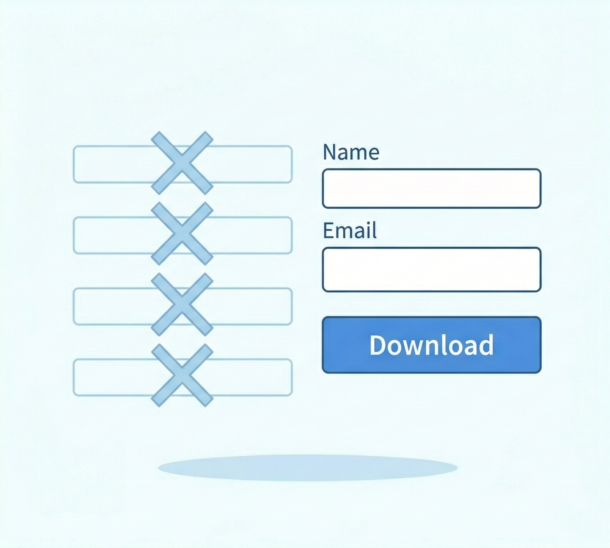
Research on opt-in form length is consistent. Reducing a form from four fields to three increases conversions by up to 50%, according to data documented by Search Engine People and Douglas Karr. A case study conducted by Unbounce’s Oli Gardner found that reducing a form from eleven fields to four produced a 120% increase in conversions. The minimum viable form for most cold traffic opt-ins is first name and email address. Requesting additional fields should be reserved for situations where that data meaningfully changes what the reader receives, such as personalizing the follow-up sequence by role or industry.
The Distribution Move Most Marketers Skip Entirely
A content upgrade is a bonus resource offered directly within a blog post that extends or deepens the specific content that reader is already consuming. Grow and Convert ran a content upgrade experiment on JeffBullas.com where four posts with targeted upgrades converted 344% more than the other top-traffic posts on the same site. Brian Dean implemented a similar approach on a single Backlinko post and moved the conversion rate from 0.54% to 4.82%, a 785% increase. The reason this works is straightforward: a reader already engaged with a specific topic requires minimal persuasion to accept a resource that directly extends what they are reading. The upgrade feels like a continuation, not an interruption.
Landing Page Benchmarks Worth Knowing
According to Unbounce’s 2024 Benchmark Report analyzing 57 million conversions across 41,000+ landing pages and 464 million visits, the median conversion rate across all industries is 6.6%. Industry-level rates range from 3.8% for SaaS to 12.3% for Events and Entertainment. A lead magnet landing page converting below 4% typically has a structural problem in the headline, the value proposition, or the match between traffic source and offer.
| Traffic Source | Conversion Rate (Unbounce 2024) | What This Means in Practice |
| Email campaigns | 19.3% | The strongest channel — warm, pre-qualified audience |
| Paid search (Google) | 10.9% | Intent-driven; converts well but below email |
| Paid social | ~12% | Derived: Unbounce reports email converts 60% more than paid social |
| Display advertising | Lowest of all measured channels | Email converts 370% more than display per Unbounce data |
Source: Unbounce 2024 Conversion Benchmark Report
Funnel Placement and the Consumption Gap
Ebook lead magnets work best at the top and middle of the funnel, where the goal is education and trust-building rather than closing. According to NetLine’s 2025 research, ebook downloads are 12% less likely to indicate near-term purchase intent compared to other content formats, while Playbook registrations are 115% more likely to be tied to a buying decision within the next 12 months. This means ebook lead magnets should connect to a nurture sequence rather than directly to a sales conversation.
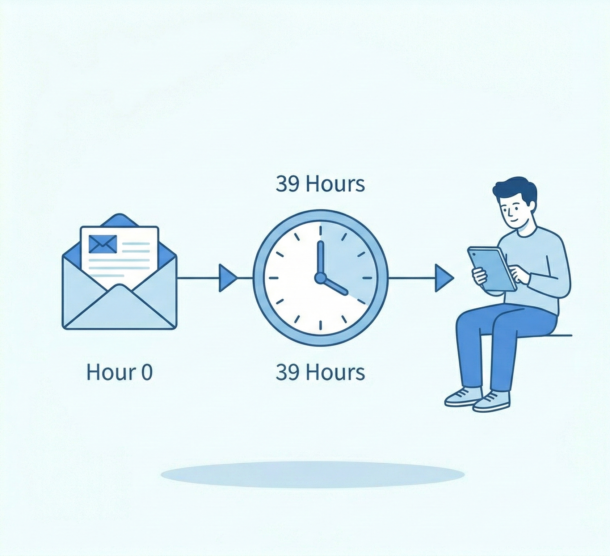
There is also a timing dimension that affects how nurture sequences should be built. NetLine’s 2025 report found that the average B2B ebook is consumed approximately 39 hours after download, a consumption gap that widened by more than 7 hours year-over-year. A follow-up sequence that assumes immediate reading and pitches the next step within the first 24 hours is reaching the reader before they have received the value you promised. According to Focus Digital’s 2025 conversion research, companies with systematic follow-up sequences achieve 25 to 35% above-benchmark conversion rates compared to those that deliver the ebook and send no further communication.
What Actually Makes an Ebook Lead Magnet Convert to Customers
A high download rate is not a reliable indicator of a high-performing lead magnet. Many ebooks collect email addresses from people who never open the file and never buy anything. The gap between a downloaded ebook and a converted customer is where most lead magnet strategies break down.
Ebooks written to showcase the author’s expertise follow a fundamentally different logic than ebooks written to solve a reader’s specific problem, and conversion rates reflect that difference. An expertise-first ebook demonstrates the depth of what the author knows across a topic; a problem-first ebook takes the reader from a specific current state to a specific better state, which is the outcome the reader wanted when they exchanged their email address for access. The second approach converts more reliably because its value is tied directly to the reader’s motivation for downloading it.
Seven Criteria for an Ebook That Converts Readers into Buyers
These criteria come from Blog Marketing Academy’s conversion framework and are consistent with patterns observed across practitioner case studies in multiple industries:
- The problem is hyper-specific and the audience is hyper-specific. A title like \”The 5-Email Welcome Sequence Template for New Course Creators\” converts better than \”Email Marketing Tips\” because the first tells a specific reader exactly what they will get. The narrower the targeting, the stronger the conversion on the opt-in and downstream.
- The ebook makes one clear promise. Content that tries to cover a broad topic ends up delivering diffuse value. A single focused promise is both easier to keep and easier for readers to evaluate.
- The end result is concrete and imaginable. The reader should be able to picture where they will be when they finish — a completed template, a decision made, a process they can implement that day.
- The content is consumable in under 30 minutes. Immediate gratification matters. A resource that can be used right away reinforces the value of the exchange and builds the trust that enables the next step.
- Each insight builds toward the paid offer. The ebook should not just provide value in isolation. Each section should logically advance the reader’s understanding in a way that makes the paid product or service feel like the obvious next step.
- The design signals high perceived value before a word is read. Professional layout, consistent branding, and quality visual elements communicate that the creator invested in this asset, which raises the perceived value of the content inside.
- CTAs appear at natural transition points throughout, not only at the end. A reader who finishes chapter three and sees a relevant next step is more likely to act than a reader who only encounters an offer on the last page.
The Mistakes That Consistently Damage Ebook Lead Magnet Performance
Content Mistakes
- No validated demand behind the topic. The most common failure pattern. Before investing in creation, confirm demand through keyword research, community forums, or direct conversations with customers.
- A page count that crossed the line into work. A 50-page guide communicates that reading it requires a significant time commitment. The 10-to-25-page range is not arbitrary.
- Content that is either too valuable or not valuable enough. Content that solves the entire problem leaves nothing for the paid offer to accomplish. Content that fails to deliver genuine value means the email address was not worth giving.
- A title the content does not actually deliver on. This is among the leading causes of unsubscribes following a lead magnet download.
- Expertise on display instead of a problem solved. Readers recognize the difference quickly, and expertise-first ebooks have lower completion and conversion rates.
- Generic AI output with no human layer on top. According to CivicScience 2024 data cited by Hootsuite, 62% of consumers say they are less likely to engage with content they suspect is AI-generated. AI tools are useful for drafting and editing, but they cannot supply the firsthand experience, specific client outcomes, and original thinking that give a lead magnet genuine authority.
Design and UX Mistakes
- A layout built only for desktop. More than 58% of lead magnet interactions happen on mobile. A layout that works well on a 15-inch screen may be nearly unusable on a phone.
- A file size over 5 MB. Large files increase load time and introduce friction on cellular connections.
- No table of contents. Readers who cannot quickly orient themselves to the document structure are more likely to close it without reading.
- Accessibility left as an afterthought. PDFs without alt text and screen reader compatibility exclude a significant share of users and, in some jurisdictions, create legal risk.
- Inconsistent design elements across pages. Visual inconsistency signals that the ebook was assembled rather than designed, which undermines the credibility of the content it contains.
Funnel and Strategy Mistakes
- Zero promotion after launch. A lead magnet buried in a site footer does not generate leads on its own. Distribution requires active, ongoing promotion across channels.
- No follow-up after the ebook is delivered. Dead silence after delivery forfeits the conversion opportunity the opt-in was designed to create.
- The ebook ends and the reader has nowhere to go. A reader who finishes the content with no direction for what to do next will close the document and move on.
- Ebook depth mismatched to audience temperature. A 25-page technical guide is the wrong offer for cold paid social traffic. Audience temperature should determine format before anything else.
- Too many form fields on the opt-in. Every additional field introduces friction. Name and email is the appropriate baseline for most cold traffic lead magnet offers.
- Lead magnets treated as permanent, set-it-and-forget-it assets. Content relevance and design conventions change over time. Build a review schedule into your content calendar and audit lead magnets at minimum annually.
Things That Affects How You Should Build Ebooks Today
AI Content Saturation Raised the Quality Baseline
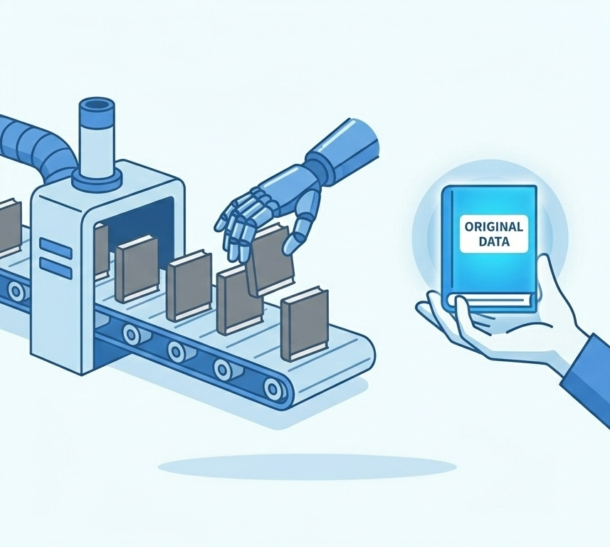
Generative AI tools made it possible for any organization to produce a polished-looking ebook lead magnet at near-zero cost. The volume of lead magnet ebooks in circulation has grown sharply, and a significant portion of that new supply is generic, derivative, and structurally indistinguishable from competing assets in the same niche. According to CivicScience 2024 data cited by Hootsuite, 62% of consumers say they are less likely to engage with content they suspect is AI-generated. The result is that ebooks containing genuine firsthand experience, original data, and specific client outcomes now stand apart from the volume of AI-generated alternatives in ways they did not three years ago. An ebook that cannot provide something a language model cannot generate is competing on the wrong terms.
Gated Content Cannot Be Indexed by AI Search
Google AI Overviews, ChatGPT, and Perplexity do not crawl gated content. With 69% of Google searches now ending without a click as AI-generated summaries replace traditional results, an ebook that sits behind an email gate has no organic discoverability in AI-driven search. The practical response is a hybrid content strategy: keep educational, awareness-stage content ungated for AI and SEO visibility, and reserve the gate for assets that are genuinely worth trading an email address for. An ebook that does not clear that bar should probably be a freely accessible blog post instead.
Privacy Regulations Increased the Strategic Value of First-Party Data
Safari and Firefox now block third-party cookies by default, and state-level privacy regulations that took effect in 2025 restrict data collection to what is demonstrably necessary. In this environment, an email address obtained through a legitimate value exchange is more strategically important than it was several years ago. It is consent-based, first-party, and owned by the business rather than rented from a platform. This gives the ebook lead magnet renewed relevance as a data collection mechanism at a time when other acquisition methods are becoming more restricted.
The B2B Ebook Market Has Split Into Two Camps
Two trends in NetLine’s 2025 data tell a more nuanced story than a simple ebooks-are-dying or ebooks-are-thriving conclusion. Overall B2B ebook registrations grew 71.4% year-over-year, and ebooks represent 53.3% of all B2B content demand on the platform. But NetLine’s mid-2025 AI content trend data shows that within the AI category specifically, ebook registrations are down 15% year-over-year, while infographics in that category grew 662% and cheat sheets grew 78%. The practical takeaway is that audiences are signaling a preference for faster, more digestible formats at the top of the funnel even in areas where broad ebook demand remains strong — and the ebooks holding their ground are the ones built around targeted, original, substantive content rather than general topic coverage.
Attention Spans Continued to Compress
Average screen-based attention dropped to approximately 47 seconds by 2024, down from 2.5 minutes in 2004, according to Professor Gloria Mark’s research at UC Irvine. This shift reinforces the importance of modular, visually structured ebook content with clear section breaks and short reading chunks. An ebook designed around 5-to-10-minute segments is easier to start and easier to finish than one structured as a continuous long document, and completion rates affect downstream conversion more directly than download volume does.
Pre-Launch Checklist
Before You Write
- You have validated that a specific audience experiences this specific problem, confirmed through keyword research, community forums, or direct customer conversations.
- You can describe in one sentence the outcome a reader will have achieved after completing this ebook.
- You have confirmed that an ebook is the right format for this problem and audience, rather than a checklist, template, or quiz.
- The target page count matches the audience temperature and funnel stage the lead magnet will serve.
Content and Structure
- The title names a specific, desirable outcome rather than a broad topic.
- The introduction is one page or under and states the reader’s Point A and Point B clearly.
- Each chapter addresses one sub-problem and connects to the overall promise.
- Contextual CTAs appear at natural transition points throughout, not only on the final page.
- The final page presents a clear, specific, low-friction next step.
Design and Technical
- Body text is 11pt minimum throughout.
- File size is under 5 MB.
- A clickable table of contents is included for ebooks over eight pages.
- The layout is single-column and scroll-friendly for mobile readers.
- Brand colors, typography, and imagery are consistent across every page.
- All images include alt text for accessibility.
Funnel and Distribution
- The opt-in form collects three fields or fewer.
- A dedicated landing page exists with no competing navigation elements.
- A follow-up nurture sequence is ready and accounts for the approximately 39-hour consumption gap before moving to the next step.
- The lead magnet has active promotion across at least two channels beyond the landing page.
- Analytics are tracking landing page conversion rate, email open rate, and downstream conversion to goal.
- A review date is on the calendar to audit performance and update content.
The Bottom Line
The best ebook length for a lead magnet is 2,000 to 5,000 words, or 10 to 25 pages, with the highest-converting range for most markets falling between 12 and 18 pages. That is the answer the research supports, and it holds across the majority of categories and audiences.
Page count is secondary to specificity, though. A 10-page guide that solves one real problem for one clearly defined audience will outperform a 25-page ebook on a loosely defined topic in nearly every test. In 2026, the lead magnets with the strongest conversion records share one trait: they are precisely useful to the exact person who downloaded them, rather than comprehensively useful to a loosely defined category of people.
The era of the generic, padded, 40-page PDF as a reliable lead generation engine is over. What has replaced it is a split market where cookie-cutter ebooks are losing ground and hyper-targeted, original, well-designed ebooks are in stronger demand than ever in B2B. There is no longer a productive middle ground between those two positions.
Build an ebook that is genuinely the best answer your target reader could find for their specific problem. Keep it focused enough that a person with a real job and a full inbox will finish it. Make it specific enough that finishing it makes your paid offer feel like the natural continuation. That is what separates a lead magnet that converts subscribers into customers from one that converts email addresses into unsubscribes.
Frequently Asked Questions About Ebook Length for Lead Magnets
Get answers to the most common questions about creating the perfect-length ebook to grow your email list
What is the ideal ebook length for a lead magnet?
The ideal ebook length for a lead magnet is 2,000 to 5,000 words, or roughly 10 to 25 pages. That range delivers enough value to feel worthwhile while remaining short enough that a busy reader will actually complete it. The highest-converting range for most markets falls between 12 and 18 pages. Go beyond 30 pages and your ebook stops functioning as a quick-win lead magnet and starts feeling like a research assignment to cold audiences.
Does a shorter or longer ebook convert better?
Shorter formats generally convert better for cold traffic. A GetResponse survey of 790 marketers found that 58.6% reported higher conversion rates with short-form content over comprehensive long-form guides. In one documented A/B test, replacing an ebook with a one-page checklist on the same topic pushed signup rates from 2.1% to 8.6% — nearly a 4x improvement. That said, longer, more substantive ebooks can outperform shorter ones for warm B2B audiences who expect depth and original frameworks.
How does audience temperature affect the right ebook length?
Cold traffic — first-time visitors from ads or search — has approximately 47 seconds of focused attention available before deciding whether to engage. For these audiences, a 5-to-12-page focused guide or cheat sheet consistently outperforms longer resources. Warm audiences who already follow your content are willing to invest more time and will respond well to a 15-to-30-page ebook with original frameworks and case studies. Audience temperature should be the first variable you define before deciding on page count.
Should B2B and B2C ebooks be different lengths?
Yes, significantly. B2B buyers approach ebooks as part of a deliberate research process, so a 15-to-30-page resource with original data or proprietary frameworks is entirely appropriate. NetLine’s 2025 report shows B2B ebook registrations grew 71.4% year-over-year, confirming strong demand for substantive content. B2C audiences, by contrast, rarely encounter lead magnets during research mode. For consumer categories like health or personal finance, anything over 10 to 15 dense pages has a high probability of being saved to a folder and never opened.
What should be included in a lead magnet ebook’s structure?
A high-converting ebook lead magnet needs five core elements: a benefit-driven cover page, a clickable table of contents for any ebook over eight pages, a one-page introduction that names the reader’s problem and promises a specific outcome, three to seven focused chapters each solving one sub-problem, and a dedicated call-to-action page as the final page. Contextual CTAs placed throughout at natural transition points significantly increase the likelihood readers act before reaching the end.
How does an ebook compare to other lead magnet formats in conversion rate?
Ebooks convert at around 24% according to Leadpages data, which places them below quizzes (40.1%), cheat sheets (roughly 34%), and checklists (roughly 27%). However, raw conversion rate is only part of the picture. Ebooks tend to attract more qualified, research-oriented leads and are better suited to building authority in depth. Template kits and checklists win on opt-in volume for cold traffic; ebooks can win on lead quality and downstream conversion when built around a specific, original insight.
What design rules matter most for ebook lead magnets?
Four design standards have the biggest impact on read-through rates: body text must be at least 11pt (12pt minimum for mobile), file size should be kept under 5 MB to avoid friction on cellular connections, the layout should use a single-column format for mobile readability, and brand colors, typography, and imagery should be consistent throughout. More than 58% of lead magnet interactions now happen on mobile, yet most ebook templates are still designed for desktop PDFs — a major usability gap that directly affects completion rates.
How many fields should my ebook opt-in form have?
For most cold traffic opt-ins, the form should collect first name and email address only. Research shows that reducing a form from four fields to three increases conversions by up to 50%, and one Unbounce case study found that cutting from eleven fields to four produced a 120% lift in conversions. Request additional fields only when that data meaningfully changes what the reader receives — for example, personalizing a follow-up sequence by role or industry. Every extra field is a friction point that costs you leads.
What is the biggest mistake people make with ebook lead magnets in 2026?
The most damaging mistake today is producing generic AI-generated content without any human layer on top. With 62% of consumers less likely to engage with content they suspect is AI-generated (CivicScience 2024), and gated ebooks invisible to AI-powered search like Google AI Overviews and ChatGPT, an ebook that could have been written by a language model without any firsthand experience or original data is competing on the wrong terms. Ebooks with specific client outcomes, original research, and proprietary frameworks are outperforming generic content by a widening margin.
What should happen after someone downloads my ebook?
A follow-up nurture sequence is essential — dead silence after delivery forfeits the conversion opportunity the opt-in was designed to create. Crucially, NetLine’s 2025 research found that the average B2B ebook is consumed approximately 39 hours after download, so a sequence that pitches the next step within 24 hours is reaching the reader before they have received the value you promised. Companies with systematic follow-up sequences achieve 25 to 35% above-benchmark conversion rates compared to those that deliver the ebook and send no further communication.